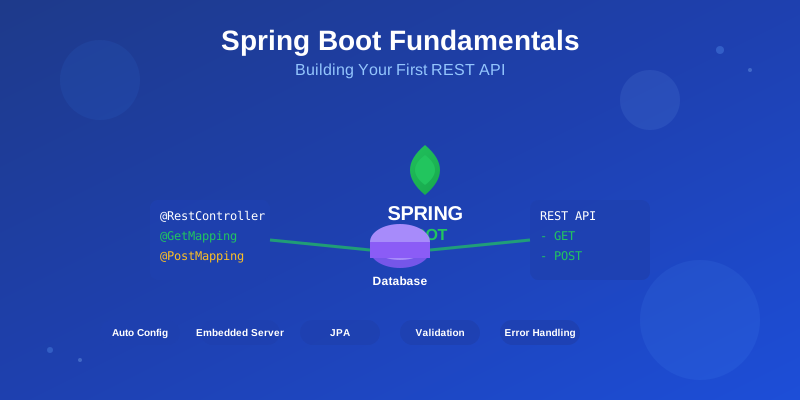
Spring Boot Fundamentals: Building Your First REST API
Spring Boot is a powerful framework that simplifies the development of Spring-based applications. In this tutorial, we'll build a complete REST API from scratch.
What is Spring Boot?
Spring Boot is an extension of the Spring framework that eliminates the boilerplate configuration required to set up a Spring application. It provides:
•**Auto-configuration**: Automatically configures your application•**Embedded servers**: No need for external servlet containers•**Production-ready features**: Health checks, metrics, and more•**Opinionated defaults**: Sensible defaults for rapid developmentSetting Up a Spring Boot Project
1. Create a New Project
Use Spring Initializr (https://start.spring.io/) or your IDE to create a new Spring Boot project with these dependencies:
•Spring Web•Spring Data JPA•H2 Database (for development)•Spring Boot DevTools2. Project Structure
Building a User Management API
1. Create the User Entity
2. Create the Repository
3. Create the Service Layer
4. Create the REST Controller
Adding Validation
1. Add Validation Dependencies
Add to your `pom.xml`:
2. Update the User Entity
3. Update the Controller
Testing Your API
Using cURL
Best Practices
1. **Use DTOs**: Create Data Transfer Objects for API requests/responses2. Implement proper error handling: Use @ControllerAdvice for global exception handling
3. Add logging: Use SLF4J for logging
4. Write tests: Unit tests and integration tests
5. Use profiles: Different configurations for different environments
Conclusion
Spring Boot makes it incredibly easy to build robust REST APIs. With its auto-configuration and opinionated defaults, you can focus on business logic rather than boilerplate code.
In the next tutorial, we'll cover advanced topics like security, caching, and deployment.
Happy coding!